Friday, June 24, 2016

DIY VanGogh's Starry Night; A digital story critique


After reading this week's Lankshear and Knoble:(2008) Ch1: DIY Media, I decided to tackle a review of a You Tube Video that has made the rounds lately on Facebook, Pintrest and other media websites. For this critique I will be looking at media grammar, story and voice/creativity. 

The video is a Turkish medium called Ebru, or painting on water. The piece is completed by Ebru pro Garip Ay. Though it is not exclusively posted as a DIY, there is a world of buzz around the idea that anyone could attempt this process. 


The Media Grammar

The small excerpt given below the video is concise and give a little information, offers 2 websites to look into the artist, and then also sites to see more art and design. Looking at the job of You Tube to inform, and spark interest in the media, I would say that it has done it's job, I looked further in into the art of Ebru, and the artist. The wording, context and phasing are all appropriate for a variety of viewers, the language though simple is not overly simple, but could be read by a a beginning reader. 

The Story

The story is short and could use far more background, to help people understand the art of Ebru, but does leave the part of participation to the viewer, which according to Lankshear and Knobel, is exactly what they should have done. The video is paired nicely with Ludwig Van Beethoven's - Moonlight Sonata, and the comments below offer a range from amazing to thoughts on the life of Van Gogh.

Voice and Creativity

The work itself is incredible creative, the video itself , not so much. Though the video is well dubbed and produced, but on the whole is not very creative. There could have been a title in a Turkish font, or a little back story on the art of Ebru. The work itself does resemble the famous work by Van Gogh, and it is fascinating that Ay then turn the work into a portrait of Van Gogh without changing the water. But when pairing the two there are dramatic differences, and should there be? After comparing the two, Ay had really created a sort of 're-mix' of the famous painting, not an image of the famed 1889 Starry Night. 


Garip Ay Starry Night, Ebru 2016
Vincent Van Gogh Starry Night, Acrylic 1889


The video is  a perfect example of how new technology and media can be synthesized with old techniques and tools to promote visual aesthetics. The difference between the two, no one tried to copy or emulate Van Gogh in his time, he was/is a Master, whereas today the digital age has really made nearly everything accessible. 


https://narrateannotate.files.wordpress.com/2016/05/lk2008ch1.pdf
https://www.youtube.com/watch?v=E1eS3ChsQAM
http://www.moma.org/learn/moma_learning/vincent-van-gogh-the-starry-night-1889


Wednesday, June 22, 2016

Ds106 6 second watercolor 2


6 Second lesson-

Well here is something that makes me feel a little 'Bob Ross' on crack, minus the afro and acrylic. Though I refrained from mentioning happy trees and clouds, I think he would have still been proud, and really anyone could compose a similar image by following along after downing 12 cups of espresso.

There is no media trickery here, a single shot displays the simplicity in which a water color painting can be made with very little supplies and only a small bit of manipulation. For this daily create, it was a no-brainer to combine my digital and non digital self.

 I try to complete at least one water color or sketch a day, when I am lucky, I squeeze in two into the the busy western life that have become a custom to. No, this is not something that I have done my whole life, and much like living in the digital limelight, I have just began to live again by sketching. I blame a man by the name of Danny Gregory, after hearing him talk, and watching him sketch during an ART of ED conference, I have been hooked, he is my creative Yogi. I follow his blog: https://dannygregorysblog.com/, have purchased his books, ( yes all of them, which I have lent out like a favorite pair of pearl earrings to very special people) and now follow him on Twitter. Wow, that sounds creepy- but really he is quite inspiring, and really teaches one to slow down and look closely to the things that are around us, kinda like the Warhol of today, without all the fame and hype.

So how do I get my student's to react the same to sketching? Good question, let me know when you find the answer- As a new(er) teacher, I still struggle getting my students to practice, and sketching what is in front of them is a challenge. Let them 'free' draw, and they will draw every cartoon character and everyone else's drawings all day, but to extract their own creativity, I am still pulling teeth for about 75% of them. Sometimes I think I am expecting too much from elementary, but even my middle schoolers, are the same. I am wondering if offering more of a daily create, and the use of technology might inspire them, maybe if it is some of this 'new school' creativity, it will become more successful? 

I put the movie together using Imovie, after all I am a complete Apple drone (again, it creeps me out to say so, but for the artist, a PC just won't due). I had forgotten how much fun, and all the little gadgets, and buttons, to make things do this and that. Much like riding a bike, it took a few trips around the block and I felt back in the saddle again, and snap there was my own little movie. I hope it sounds as intentional as I had planed, for NAS to just start singing about life as the film ends... 

Sketching, painting and creating is life, and now I feel so too, might this digital thing.  


Sunday, June 19, 2016

Pouring on a little more: Digital Stories Week 2 reflection


As we continue to learn and add to our repertoire of digital understanding, I feel our learning developing like a Holton Rower painting, ever changing and flowing, not sure what it will look like in the end. 

You can say that Rower's work is a re-mix of the color field paintings of the 40's - 60's, where artist like Rothko and Still painted massive paintings of blocks of color. Rower takes from this experience and create enormous paintings by pouring paint, lots of paint. The result is a new style of color field painting with a sixties feel of undulating color. Each color represents a new media, or digital tool, and I find myself sampling and pouring each learned artifact using different methods to see which yields the most aesthetic result. 


The same way that you sit mesmerized by the movement of the paint, I find myself becoming fascinated with this digital language, as an artist I have always been curious and willing to try any medium, and now with teaching and the exposure to all that the digital era has to offer I feel like there is a whole new art store at my finger tips. 

Lankshear and Knobel, synthesize literacy and the digital age by theorizing that all this meme and gif, blogs and tweeting along with every other shorthand communication are all the new literacy, the new way that our culture artifacts and documents the stories of our days, and I think that they are right. I was awakened to the idea that many things are re-mixed and the context of the word is forever changed in my mental dictionary, as the word art has so many times. As I become more comfortable and understanding of the media, my creating becomes more 'mine', and I am able to start to express myself digitally. The daily creates continue to challenge my process in a good way as I challenge myself more to use the mediums presented and seek out new ones. 

I loved reading A open letter to my students, Shaffer's philosophies on teaching are so similar to mine. As I read through the article, I saw the correlation to this class, the discovery and exploration that must be student driven, I can imagine that trying to lecture on digital story telling would be about the same as a lecture on pouring paint, BORING! I feel that learning is all about the self discovery, trying to post a video what feels like several million times before it works, is far more memorable than just being told how to do it, conquering the task, that feeling is what I try to teach my students to look for. 
As the class for me begins to flow like paint from the cup, each week creating a new vision of digital media, I think that I have picked the perfect complement in Art as my focal theme, there is always as artist, period or medium that relates to the learnings, and an endless supply of street art to help support my thoughts and express my emotions. It has also become my online art room this summer as I hope to encourage people to look more at the art around them, expose the readers of my blog to new artists and a different artist with every post.

Art and literacy hold a lot in common, they are both not something that can not be described in black and white and both will forever change based on the the time and culture of the people seeking to describe them. The value of both will changed based on the viewer, seller and purchaser of the item being traded, but both will always rather intentional or not, will document and speak to the moment they were created. 


Friday, June 17, 2016

Remixing since the beginning of time- Wk 2 Reading Reflection

Urban Street Art, from the way back-

 Re-mixed

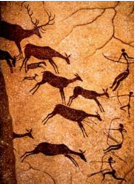
Lascaux Cave Paintings- Dordogne region of southwestern France, circa Paleolithic Period, 20 thousand years ago
Take a virtual tour

It was a conversation this week via Hypothesis, on Lankshear and Knobel's "New Literacies" (2007) that re-sparked my attention to the earliest form of storytelling, and street Art. The Caves at Lascaux hold the history of man, and the first recorded images/writing of man that we know to date.

In the dialogue there was a dispute over the context of writing and new literacies, ie: Memes. Are memes writing? If I would have asked my self this question ten years ago, I wouldn't have the slightest clue of what I was talking about, but today, memes are everywhere. The focus of the conversation became rather memes, and other visual graphics are actually writing because they are only pictures. Only pictures, I gasp? And my mind instantly went to the Caves at Lascaux, if these things were mere pictures, and held no literary connection, we might not be 'writing' today. As Lankshear and Knobel theorize the idea of re-mixing as a means to communicate and tell stories in various mediums, I can 't stop thinking about those cave 'drawings'.
Lascaux cave painting


As the cave paintings at Lascaux, offered the people of the time a way to record history, tell stories and inform those who came across the               paintings, the petroglyphs do the same things, slightly different, or shall we say in re-mix?
WE can continue to follow throughout history as images, symbols and pictures are used and manipulated to communicate and tell the story of life. 
petroglyphs Colorado

Images and Symbols verses characters and 'writing'


contemporary graffiti alphabet
I offer that some forms or symbols used for writing, some more intricate than the next, but all images and pictures. All are a re-mix of the idea to build a system of symbols and images to communicate. In Lascaux there are over 2,00 symbols that represent what we now know are six 'stories' of the life of the early paleolithic man that inhabited the area over 20 thousand years ago. Imagine if the works in Lascaux were dismissed as just pictures.

Arabic 
I offer you you this:  WE learn and are taught what pictures and symbols create a language that is spoken or written to communicate.


What does this all MEME? 


Memes are just that, the current form of writing, the new version of what humans have been doing for thousands of years, create graphics to express what they wish to communicate about a current or past event. The meme takes a whole new twist or 're-mix on the form of writing as we know it, and re-mashes visuals with our writing system to invoke a deeper understanding of the communication that the author hopes to convey. Imagine the image on the right being posted alone, it looses impact. 


 With a positive mindset on technology,  we have to embrace this new way of writing, teach it, learn it until the next it to is re-mixed into something new. Symbols and images have changed over time , just as Shakespear's new language boggled the minds of those around him,  we no longer write using script, we must adapt to the way our written language is being used today, without forgetting and diluting the importance of the ways we communicated in the past.  The paleolithic people used the symbols familiar to them to write their stories, street artist use familiar symbols today to record, inform and communicate, the walls are bigger, the colors brighter and the medium and tools have changed along with the exact reasons, but the idea stays the same, tell a story. 

Banksy

Yes- Of course there is a Banksy for this too... look familiar ( or would this be considered copying like Warhol)

http://www.bradshawfoundation.com/lascaux/
Lankshear & Knobel (2011) Chapter 4: New Literacies and Social Learning Practices of Digital Remixing


Andy Warhol, it's all Re-mix! Week 2 Story Critique


"They always say that time changes things, but you actually have to change them yourself." - Andy Warhol

Remind you of a mindset from Lankshear & Knobel (2007) Chapter 1: Sampling “the New” in New Literacies? Warhol was the positive mindset that allowed art to move forward and allow the everyday person to experience and feel art like never before. 

Self Portrait Andy Warhol, 1965

With all the talk about re-mix and using new technology this week, could there be a better artist to evaluate news on other than the re-mix master himself. Andy Warhol never created anything that was 'his own', his very idea of art was to take what ever is already there, make it art and accessible to everyone. New technologies? Warhol was an innovator and pioneer for POP art, he set he stage for 'art for the masses' and could be partially responsible for what we call re-mixing today. All those posters and replications of art are all thanks to one quirky man that didn't even want to be an artist, he just wanted to be famous and to never be forgotten. Well played, Warhol! 

This week I will be critiquing an older but relevant digital story from Art News. I will be looking at story, research, and digital craftsmanship. If you need a quick history lesson on Warhol, look here. 

The Story

is well written and it is obvious that the writer is familiar with Warhol and the many tribulations that have occurred with his work, both during and after his life. I love the the author continuously quotes Warhol and lists the astronomical amounts that the famous 're-mixer' has procured for his works. The story follows a distinct time line and although the story is about a negative topic of scandal and falsehoods, the author keeps a non bias voice. The story is intriguing and keeps the readers attention with the twisting story, even though there is a lot to take in. 


Research

It is very clear that the writer knows their stuff, research is evident and documented, the history reads true to any world class biography. Being that the digital story does appear on an ART website, and that the subject has such a prolific history, I would have liked to see graphics for the pieces mentioned in the article, not just the self portrait. The Brillo boxes are part of the title, don't they deserve a spot on the page? 
Brillo Soap Pad Box,  Andy Warhol 1964

Digital Craftsmanship

In looking at digital craftsmanship, there is a lot to like. The clean page is adorned with complimenting fonts, a colorful header a top the simple black and white page, and typography that is easy to read while pleasing to look at. My only complaint, again, in an ART publication, I expect to see more of the artists work. There is no shortage of Warhol work, and with their being multiple pieces mentioned, I would have added a small image of each.

Below is the 63$ million dollar silk screen by Warhol, well meaning he made the silk screen, he did not take the photo! How is it done, and why is it questionable art? Here is Warhol's non art process


Colin Lankshear - Michele Knobel - elea E-Learning - 2007
warhol:
http://www.warhol.org/collection/art/artistsperspectives/1998-1-709/
Warhol:
http://www.artnews.com/2011/04/01/the-trouble-with-warhol/

Wednesday, June 15, 2016

John Lennon does beatbox...


DS106 Audio Assignment


                                                                   http://assignments.ds106.us/assignments/sounds-effects/

Keeping true to my passion, I couldn't pass up an opportunity to make some street art 'talk', literally. While surfing through the numerous options, I have to admit, I already had a plan in mind, so I looked for an assignment to match, cheating I know. Here's a little tid bit of history to help you understand, ( I am not normally the cheating kind but...) I just went through a technology PD before school got out and have been playing around with some of the sites that I was exposed to during training. As an Art teacher, you have to understand, most PD's are not relevant, so when one comes along that I can actually utilize, it has a lasting effect. 

The Image

John Lennon, his image speaks for itself, right? This image brings it all, social commentary and my passion for art, street art in particular. I am only sadden that we are nearing the end of the generations that understand just how profound his image is, and what it stands for. What would Lennon say about all the violence today? Yoko powers on, but it's just not the same. In light of all the disparity, I wanted 'Imagine' what Lennon might be doing now, There are so many artists using music as a means of education and empowerment, would he join in with Brother Ali, Language Arts Crew, Roots, Atmosphere, and throw down a little beat about what the world has become? Truth. 

The Sound

As mentioned above, I have become completely enamored with a few Apps that I discovered in a recent training. Incredibox is a fairly new to me, but has been around since 2008. An app that allows you to become your own DJ, my daughter and I spend hours playing around and making music. A completely user friendly interface makes it a breeze to make a simple tune, with more practice you can learn to pause and record the music. There are 4 versions to meet any music lovers taste, try it out, jam on! Students with free time? They LOVE to create a jam and are eager to share the experience, queue engagement, language and instructional conversations in the classroom.


If you can't appreciate the simplicity of Incredibox, and your already more of a DJ and need something a little more sophisticated, try out Beatlab. You can check out other users musical talents and add your own to Beatlab radio on SoundCloud.

                                    The video

Another mesmerizing and completely fun app, Chatterpix. Again a user friendly interface allows the user to take or select a picture and add their voice. I have been using this app in the classroom, and all the kids love it. For the older students, I use the app as an art history lesson, taking a photo of an artist or say the Mona Lisa, and having the picture give the history instead of me, far more entertaining! And with the younger kids, they love to give a voice to their creations. Kindergarten made talking dinosaurs, the dinosaurs told a short story about them selves and what they eat-
Pure magic to a kindergartner, not to mention cross-curricular and   again opportunity for instructional conversations. 


http://blog.unicomitalia.org/wp-content/uploads/2012/09/Le-migliori-street-art-di-settembre_Marrakech-Marocco.jpg

Sunday, June 12, 2016

Digital Stories: My Abstract Expressionism


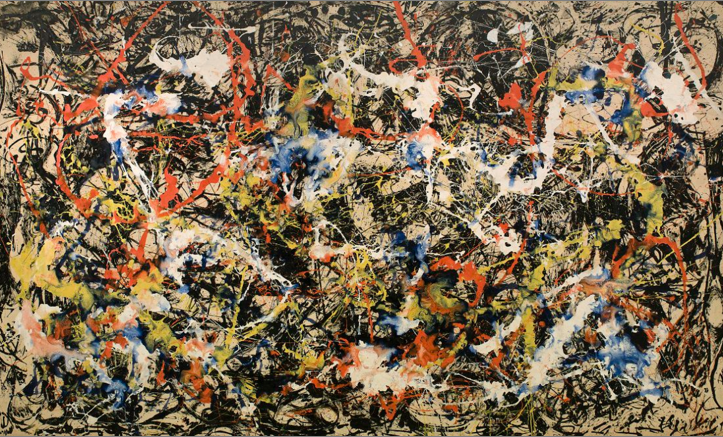
Convergence 1952, Jackson Pollock
Jackson Pollock's style of painting, as exemplified by Convergence, is one of the most important, innovative developments in the history of painting. When Pollock created the painting, the United States was at the induction of the 'cold war' with Russia. Convergence was the embodiment of free speech, and freedom of expression. It was everything that America stood for all wrapped up in a messy, but emotionally deep package.
The modern artist is working with space and time, and expressing his feelings rather than illustrating. ”
-Jackson Pollock

Digital Stories: My Abstract Expressionism

I am exhausted and my mind remains a jumbled mess of information, new ideas, and anxiety about the coming weeks. I see my work this week and am reminded of the great Jackson Pollock in many different ways. 


In first, I saw digital storytelling much like an amateur see's the work of Jackson Pollock, having no reference, I questioned the technicality of the craft. When most people look at Pollock’s work, they see only splatters of paint, with no skill or talent to lay them on the giant canvases, I saw digital story telling as processing IMovie’s and creating posts, simple writing, who couldn't do that? I now realize the brevity and scope of what we call 'digital story telling'. Like Pollock, I am learning to use the tools that I have used forever in a new ways, hoping to master the techniques enough to make them mine own, and display a successful body of work that both incorporates my new understanding of digital literacy and my passion for art and change. 


The week started off with much anxiety and fear of failing, but now I can see that I just need to utilize what I do know and think of using the tools in a new way. I love the daily 'creates', and hope to modify them in my classroom in the coming year, giving students a way to be creative in an outside the box, again using the tools we have with a new way of thinking about their purpose. 


As Pollock battled his own demons, the digital era continues to be mine, there is so much that I like about being connected, but also abhor. Through Twitter, the network of like minded change agents is amazing, but I still feel that I am missing the world around me as I surf through the countless posts. I am amazed with the amount of people that have followed me, are it weird to want to know why? I am not sure about annotating and the hypothesis site, I still have a lot to learn about finding the comments, it was kind of fun... (Oh dear, does that mean I am becoming a digital nerd?)


Pollock spent a short eleven years working with his now famous technique before his death, I feel like 8 weeks is not nearly enough time to become even a budding digital story teller, to learn the tools and truly understand the spectrum of information that is being presented. However I do love a challenge, and true to the principle, I do my best work under stress. Like Pollock learning to fling paint fuelled by emotion, I have learned to use so many of these tools that we all are surrounded with; Twitter, Flicker, Sound wave, and I even encountered a new arena " Notey in my digital travels. I still wonder if I am writing too much or too little, there are so many rule to the grammar, syntax and construction of digital language that I don't yet understand. 


Completing all the assignments on time, and though I know that I will improve, I think I was quite successful. I hate the ideas of grades, but since we are constructed in the way that they are the end all be all- I would say that I met expectations. I hope to grow as a blogger and build the amount of resources that I use for daily creates and the assignments (which I also found to be very intriguing). 


Jackson Pollock' Biography
http://www.jackson-pollock.org/biography.jsp